

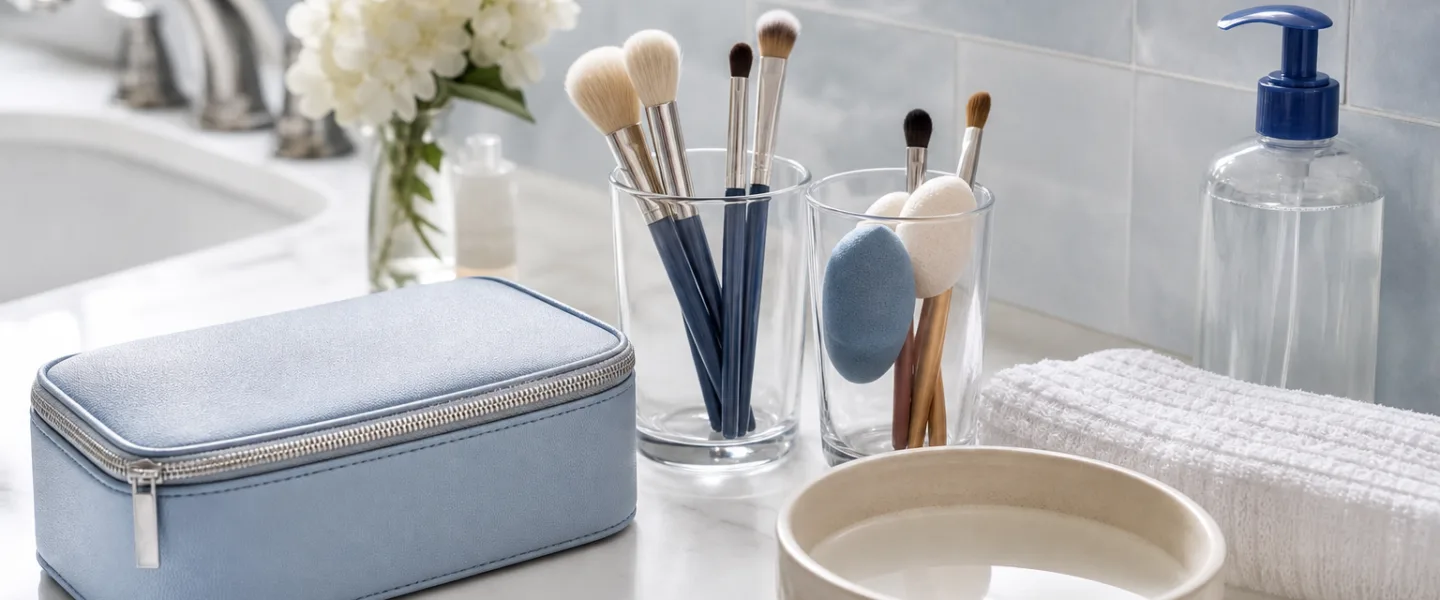
For makeup habits and acne-prone skin, start with the contact points in your routine rather than blaming one product or assuming one cause. Makeup, brushes and applicators, overnight wear, hair products, and repeated face washing can each matter in different ways.
Some makeup, skin care, and hair care products contain oil or other ingredients that can cause acne breakouts. Sharing makeup or applicators can transfer bacteria, oil, and dead skin cells; those materials can clog pores and lead to breakouts. Even makeup described as non-comedogenic can cause acne when you sleep in it, while washing your face several times a day can irritate skin and lead to more breakouts.
This is a practical audit, not a verdict about your skin. A breakout does not establish that a particular foundation, brush, or cleansing habit caused it. The useful decision is to distinguish between the products that contact your face, the way tools are handled, whether makeup remains on overnight, and whether more washing is adding irritation.
Makeup habits for acne-prone skin: audit what touches your face
“Makeup” is a broad category, and it is only one part of the contact-point picture. The American Academy of Dermatology notes that some makeup, skin care products, and hair care products contain oil or other ingredients that can cause acne breakouts. That makes it reasonable to consider the full group of products that meets your skin, including products used near the forehead, hairline, cheeks, nose, chin, and jawline.
A product-focused review and a habit-focused review answer different problems. Product selection concerns what is applied to your face or can travel onto it from nearby hair. Habit concerns what happens after application: who uses the makeup or tools, whether makeup is still on at bedtime, and whether frustration with breakouts has led to repeated washing. Changing only one category may leave another contact point unchanged.
This distinction also keeps the process measured. It is not necessary to treat every cosmetic item as a culprit or to assume a single change will explain every skin change. Instead, keep the audit limited to the contact points named here. That gives you a clearer way to think about makeup-related choices without turning an uncertain concern into an all-or-nothing routine overhaul.
Labels can be part of product selection. When makeup, skin-care, or hair-care products are relevant to your routine, compare the complete ingredient list with our Pore-Clogging Ingredients Checker before deciding what belongs in it. But a label or ingredient check does not address every contact-point decision. The Academy’s guidance specifically notes that sharing makeup can lead to blemishes even when only non-comedogenic products are used. In practice, choosing a product and deciding how it is used are separate considerations.

Use the same sequence for each category: identify which products contact your face, compare their ingredient lists, and then review how each product or tool is handled. Keeping product choice and use behavior as separate steps makes the audit easier to apply consistently across makeup, skin care, and hair care.
Brushes and shared makeup: ownership changes the contact point
Acne is not contagious. The relevant issue with sharing is transfer: when makeup, makeup brushes, or applicators are shared, bacteria, oil, and dead skin cells from another person’s skin can end up in the makeup. Using that makeup can transfer those materials to your skin.
The practical consequence is specific. Bacteria, oil, and dead skin cells transferred in this way can clog pores, leading to breakouts. This does not mean that a shared item proves the cause of any individual blemish. It does mean that sharing creates a distinct route of contact that is different from selecting a product for your own routine.
Keep makeup, brushes, and applicators for your own use. This guidance applies to the tool as well as the cosmetic itself: a brush or applicator can be the shared contact point even when the makeup is otherwise treated as personal. Personal ownership is therefore a more useful boundary than relying solely on the product category or package label.
Think of this step as reducing an avoidable transfer pathway, not as assigning blame. The goal is simply to keep another person’s bacteria, oil, and dead skin cells out of your makeup and off your skin. That is a concrete choice you can make without assuming it explains every breakout.
Overnight makeup and over-washing: avoid opposite extremes
Makeup selection and makeup removal are separate decisions. Even non-comedogenic makeup can cause acne if you sleep in it. Removing makeup before sleep belongs in a contact-point audit because the product’s label does not make overnight wear irrelevant.
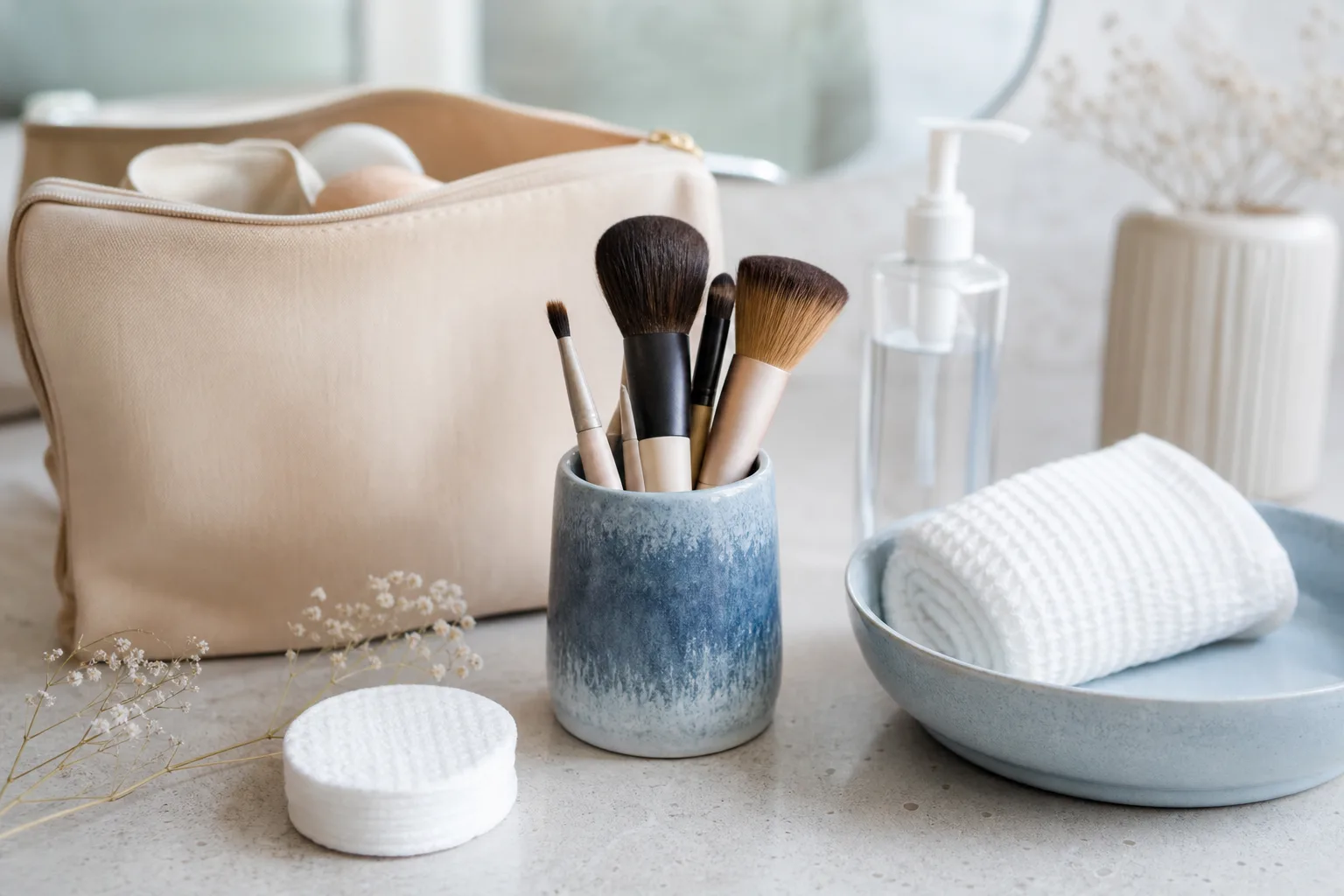
It can feel logical to answer a new breakout by washing more often during the day. However, washing your face several times a day can further irritate your skin, leading to more breakouts. Repeated washing is therefore not automatically a more helpful response to a skin concern.
These habits pull in opposite directions: one leaves makeup on longer, while the other increases face washing. The shared lesson is not to swing between them. Keep overnight makeup and repeated daytime washing as two separate habits to reconsider, rather than treating either a product label or extra cleansing as a complete answer.
A simple routine decision follows from the evidence: do not rely on non-comedogenic makeup as a reason to sleep in it, and do not respond to breakouts by washing your face several times a day. Those boundaries are more precise than trying to solve the problem by removing every makeup product from your routine.
Choose a proportionate next step for persistent concerns
If persistent concerns remain after checking these contact points, the next decision is whether general guidance is enough or an individualized routine review would help.
If persistent breakouts or irritation are making it difficult to decide how your products and habits fit together, book an In-Clinic General Skin & Acne Consultation with AcneClinicNYC. Our consultation covers acne history, skin type, concerns, and tailored recommendations, providing an individualized next step beyond a general contact-point audit.