




Non-Comedogenic Is Not a Guarantee: A Smarter Product-Screening Guide for Acne-Prone Skin
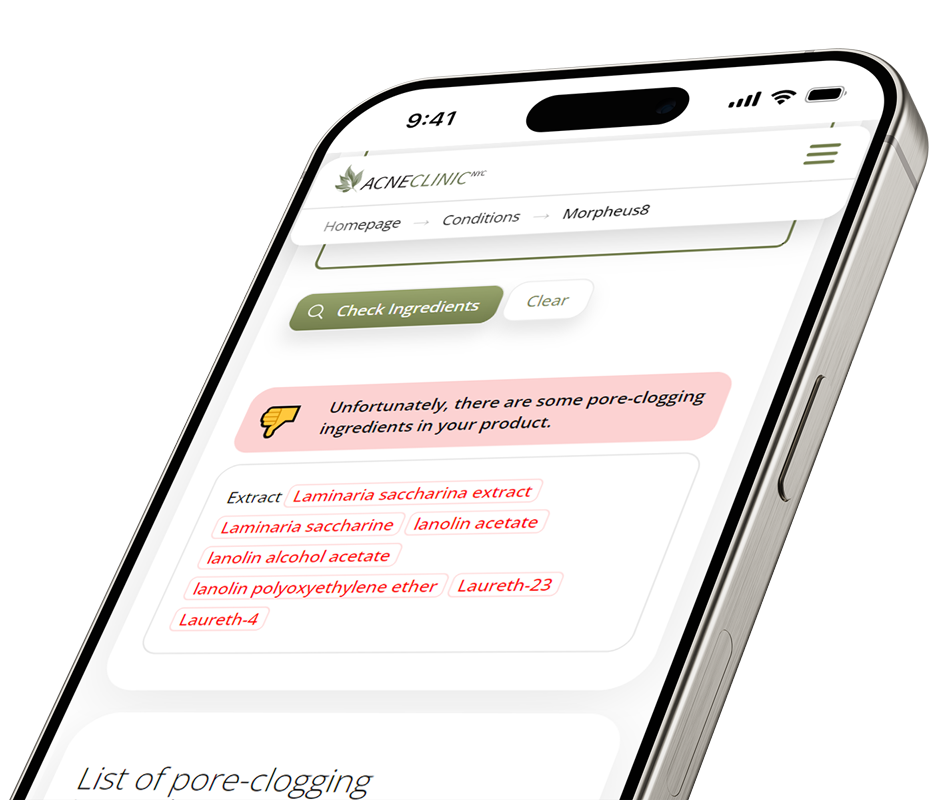
Start with our Pore-Clogging Ingredients Checker when choosing skincare, makeup, or hair products. Learn when a whole-routine acne assessment adds value.
Electrolysis Hair Removal is a safe, effective method for achieving permanent hair removal, delivering lasting results for individuals of all skin types and hair colors. If you’re tired of the constant upkeep of shaving, waxing, or tweezing — or if laser hair removal didn’t deliver the results you hoped for — electrolysis is the solution. It’s the only FDA-approved method for permanent hair removal, ensuring a proven, reliable way to eliminate unwanted hair for good.
4-20 sessions, depending on the treatment area.
Each session can last between 15 minutes to several hours — you choose the length that works best for your schedule and treatment goals!
3-5, depending on individual pain tolerance and the treated area. The face and bikini area are typically the most sensitive, though this varies by person.
1 day with well-hydrated skin, up to 5 days if the skin is dehydrated.
Every 4 weeks for the same treatment area.
Regular skin hydration and consistent sun protection are essential.
Keep the skin well-hydrated with moisturizers. Avoid using exfoliating products.
Avoid makeup for at least 5 days post-treatment, except for Oxygenetix, a product specifically formulated for post-treatment skin recovery.
Safe for all skin tones.
Pregnancy and breastfeeding.
Active skin infections, irritations, or open cuts.
Sunburn.
Pacemakers.
Hair length should be about 2 mm (size of a rice grain).
Avoid plucking or waxing.
Avoid unprotected sun exposure.
Refrain from advanced skin treatments such as chemical peels or laser sessions. Stop using exfoliants at least 3 days before treatment.
Make sure the skin is not sunburned, irritated, or affected by cuts or wounds.
If possible, come with clean, makeup-free skin so we can start your treatment right away.
For pain management, apply a numbing cream or take a pain reliever if needed.
It’s common to experience some redness and swelling after electrolysis.
While we offer laser hair removal, we have a special appreciation for electrolysis due to its versatility in treating all hair types - including vellus hair (peach fuzz), red, gray, and fair hair - on all skin tones. What truly sets electrolysis apart is its ability to prevent hair stimulation, even in the most hormone-sensitive areas like the face, making it the perfect solution for women with PCOS (Polycystic Ovary Syndrome) seeking a permanent hair removal option.
An ultra-fine electrode is gently inserted into each individual hair follicle, targeting the hair root. This precise process destroys the follicle, preventing future hair growth and ensuring permanent results.
You can typically begin electrolysis about three months after your last laser hair removal session. This timeframe allows hair that may not have been fully damaged during laser treatment to enter the active growth phase, making electrolysis more effective.
It’s not recommended to combine laser and electrolysis treatments on the same area, as the methods target hair differently and may interfere with each other’s effectiveness. However, you can safely treat different areas simultaneously. For example, you can undergo laser hair removal on your body while receiving electrolysis on your face — even on the same day. (We provide both services.)
It’s recommended to wait 24 to 48 hours before going to the gym after an electrolysis session. If you must work out sooner, choose low-intensity exercises that minimize sweating and friction on the treated skin. Be sure to clean the area gently after exercising.
Yes, you can undergo electrolysis during gender transition, including while on hormone replacement therapy (HRT). There are no restrictions unless otherwise specified by your doctor. Electrolysis is a highly effective method for permanent hair removal, making it a popular choice for individuals in the process of gender affirmation.
In about 1-2 days.
We generally do not suggest this treatment for those under 14. If you have specific concerns, please discuss them with your specialist.
Founder & Clinical Director, AcneClinicNYC
Licensed Master Esthetician, Certified Acne Specialist, International Educator in Acne Treatment
Lead LE, Certified Acne Expert, International Educator
Lead LE, Certified Acne Expert and Laser Specialist
LE, Certified Acne Expert, Laser Specialist and Electrologist
LE, Certified Acne Expert and Laser Specialist
Certified Acne Expert and Nutritionist
Nurse Practitioner
Nurse Practitioner
Thousands trust us to deliver accurate, reliable analysis that empowers you to confidently choose skincare, makeup, and haircare products that support clear, healthy skin
Share your phone number and our client care team will contact you to answer your questions and help plan your visit.
Start with our Pore-Clogging Ingredients Checker when choosing skincare, makeup, or hair products. Learn when a whole-routine acne assessment adds value.
Use a pore clogging ingredients checker, package labels, and a simple comparison sequence to screen skincare and makeup for acne-prone skin.
Hair products may be one possible factor in hairline breakouts. Compare contact, residue, timing, and where breakouts appear before changing your routine.
Choosing an acne consultation in NYC comes down to the visit format, listed location, and the kind of review you want. Compare…
Acne-prone skin can still need moisturizer. Learn why dryness and oil are different, what to look for on a label, and when…