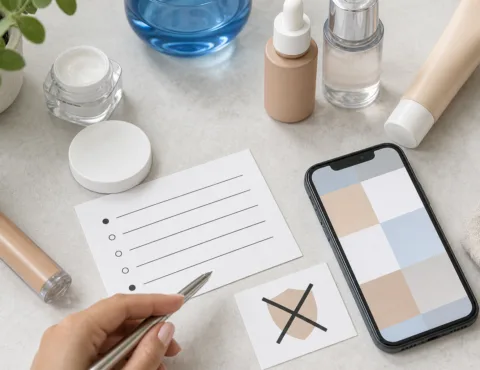
Choosing a product for acne-prone skin starts with its full ingredient list. At AcneClinicNYC, our practical first step is the Pore-Clogging Ingredients Checker: paste in the ingredients and review the matches before deciding what to buy. A “non-comedogenic” label is background information, not a substitute for that check.
This approach gives you something specific to do when two moisturizers, foundations, or hair products make similar promises. Instead of choosing the more reassuring label, compare what each product actually contains. Then keep the product-level result separate from the broader question of what is happening with your skin.
What non-comedogenic means—and why the label is not the whole decision
Comedones are clogged pores that can appear as blackheads or whiteheads. The term “non-comedogenic” refers to that pore-clogging concern. It does not, by itself, explain your acne history or establish that a product will suit your individual skin.
The American Academy of Dermatology includes non-comedogenic products in its general advice for acne-prone skin and qualifies its advice as applying to most people. That is useful clinical context. For choosing products with AcneClinicNYC’s approach, however, the practical action is to screen the complete ingredient list with our checker rather than let the front label make the decision.
The same applies to other reassuring packaging language. “Oil-free” or “won’t clog pores” should not be your reason to skip the ingredient check. Keep the wording in perspective and work from the ingredients of the exact product you are considering.
How to use our Pore-Clogging Ingredients Checker
- Find the full ingredient list. Use the list for the exact skincare, makeup, sunscreen, or hair product you want to check. Look on its packaging or product page. A short “key ingredients” panel is not the complete list.
- Paste the ingredients into the checker. Copy the full list into the field on our checker page, then select Check Ingredients. Check each product separately so the result belongs to the item you are comparing.
- Review the flagged ingredients. The result shows matches against our pore-clogging ingredient list. Use those matches as the starting point for your product comparison instead of relying on a front-label claim.
- Keep the result in context. An ingredient screen does not diagnose acne or guarantee how your skin will respond. A result without flagged ingredients is not a promise that a product will be suitable in every respect.
If you cannot find a complete ingredient list, you do not yet have the information needed for a complete check. Ask the brand for that list rather than treating a product description or an advertising claim as an equivalent.
How to compare skincare, makeup, and hair products
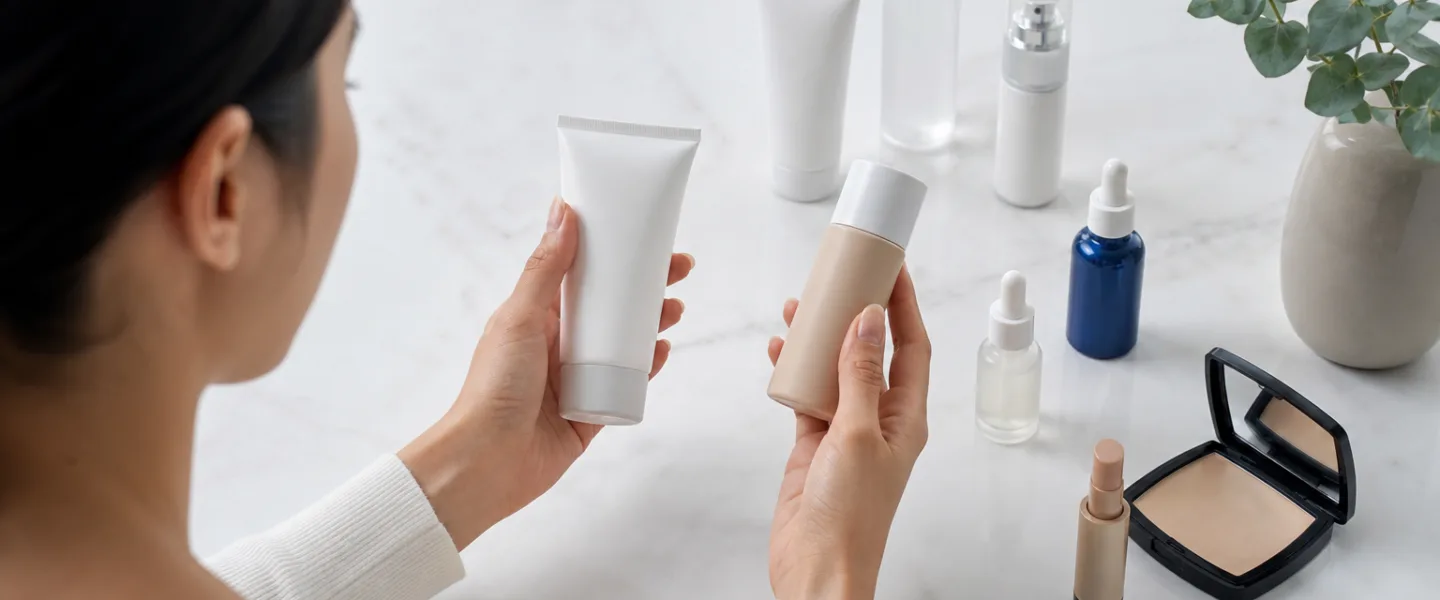
Imagine you are choosing between two moisturizers. Both packages say “non-comedogenic,” but that leaves your comparison unresolved. Find each full ingredient list, run each through the checker, and review the results separately. You can then consider practical preferences such as texture and finish without confusing those preferences with the ingredient-screening step.
Use the same sequence for foundation or concealer: check the formula first, then compare the coverage and finish you want. For sunscreen, ingredient screening belongs alongside the product’s sun-protection purpose; a checker result does not assess its sun-protection performance. Hair products also belong in a product review, rather than being left out simply because they are not sold as skincare.
The aim is a repeatable decision process. You should be able to explain why you are considering an item using its actual ingredient information, rather than only the promise printed on the bottle. That still leaves room for individual preferences and a professional review when one product check does not answer the larger question.
From checking one product to reviewing your whole routine
The checker answers a focused question: does this ingredient list contain matches from our pore-clogging ingredient list? It does not review all your products together, your previous treatments, or the pattern of your breakouts. Those are the reasons a professional assessment can add value after product screening.
For example, you may have checked your moisturizer but still be unsure how your cleanser, makeup, hair products, and previous treatment history fit together. Our Professional Acne Assessment for Acne Program — In-Clinic reviews your products alongside acne type and severity, treatment history, and possible triggers, then outlines personalized next steps. The assessment turns the conversation from one ingredient list to the broader routine and history that a product checker does not evaluate.
If you prefer a remote appointment, our Professional Acne Assessment for Acne Program — Virtual uses submitted photos and acne history, with a review of previous treatments and possible triggers. Choose the format that fits the review you need.
For your next product decision, begin with the full ingredient list and our checker. If the remaining question is how your products and history fit together, an acne assessment provides that broader review and personalized direction.

AcneClinicNYC
Start your product check with the full ingredient list.