


Adult acne product labels can make product selection feel simpler when you use them for one limited purpose: narrowing the options in front of you. The American Academy of Dermatology recommends reading labels on both skin-care and hair-care products and looking for specific acne-conscious wording. When a product looks relevant, you can then compare its complete ingredient list with our Pore-Clogging Ingredients Checker before deciding whether it belongs in your routine.
That order matters. The front label offers a quick first screen; the full ingredient list supports a closer comparison. Neither step explains every breakout or tells you why acne is happening. Together, however, they create a calmer and more consistent way to evaluate products without relying on packaging style, a familiar brand name, or a single marketing phrase.
Start with the four useful label phrases
The four phrases in the Academy’s adult-acne guidance are non-comedogenic, non-acnegenic, oil-free, and won’t clog pores. Products carrying one of these labels are described as least likely to cause acne. The wording may differ from one package to another, so two products can communicate the same kind of screening signal with different phrases.
Because the four phrases are alternatives, a package does not need to carry all of them. One of the phrases is enough to meet the specific label screen described in the guidance. This keeps the first pass simple: you are checking for a recognized signal, not scoring the number of claims printed on the front.
Consider a simple comparison between two moisturizers. One package may say oil-free, while another may say non-comedogenic. The labels give you a reason to keep both products in the comparison; they do not, by themselves, establish that one is the better choice for you. Turning the containers around and reviewing the full lists keeps the decision focused on the actual products rather than on which front label sounds more persuasive.
The same distinction applies when the preferred wording is absent. Its absence does not prove that the product caused acne, just as its presence does not identify the source of a breakout. It simply means the package has not supplied that particular screening signal. At that point, the complete ingredient list becomes the more useful information to compare.
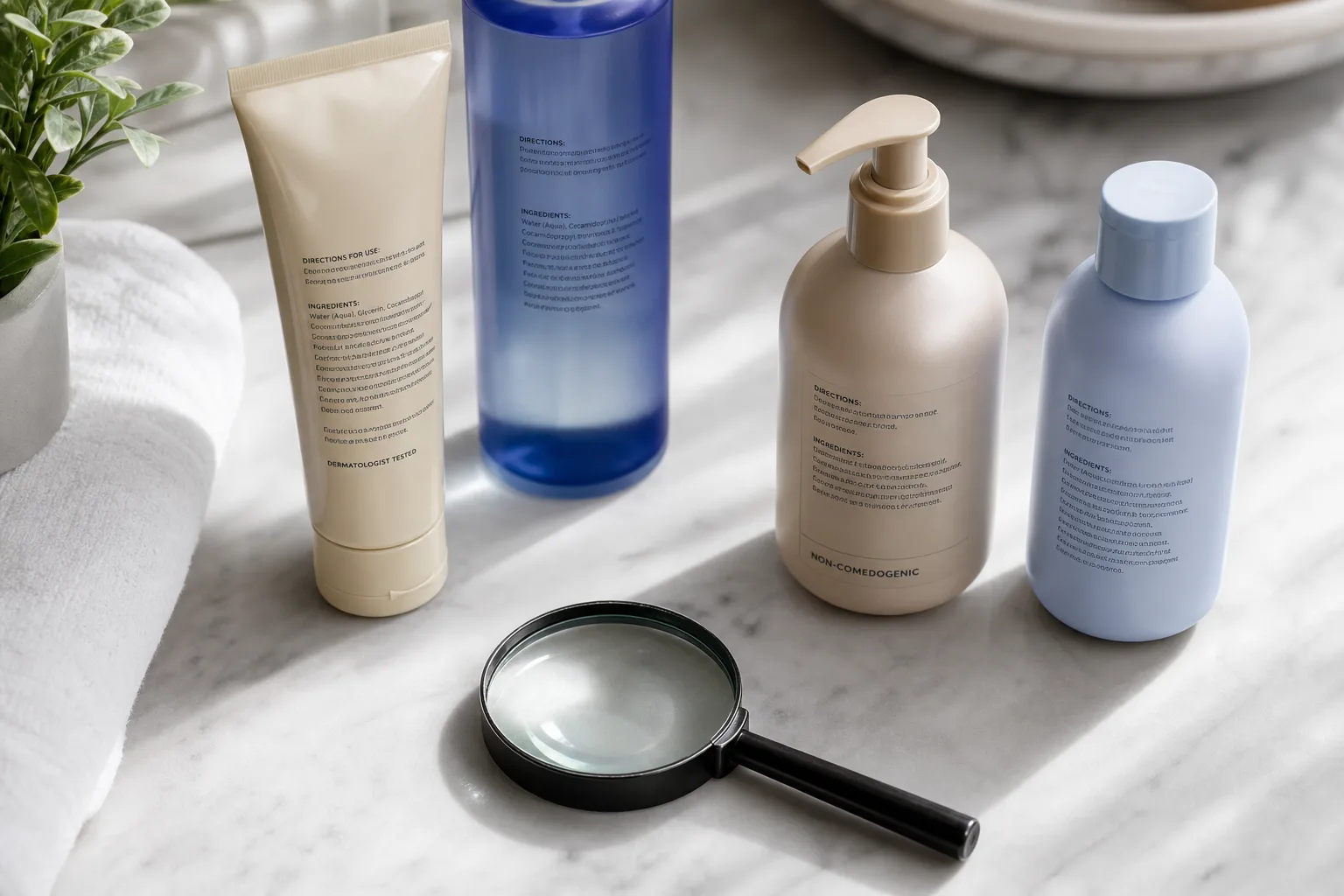
Once one of those phrases has earned a closer look, review the complete ingredient list in the checker. Apply the same sequence to each relevant product so the comparison uses consistent information from the package rather than whichever front-label phrase is most prominent.
Put adult acne in the right context
Adult acne can describe more than one experience. Some adults continue to get acne well into their 30s, 40s, and even 50s. Others develop acne for the first time as adults, which is often called adult-onset acne. Knowing that both patterns exist can make the topic feel less unusual, but the distinction is background context rather than a personal explanation.
The Academy also notes that women tend to get adult acne more often than men and that adult-onset acne is most common among women going through menopause. Those are population-level observations. They can help explain why adult acne deserves its own discussion, while still leaving individual product choices and concerns to be considered on their own terms. The time course also gives useful context for a consultation: continuing acne and a first adult episode are different histories to bring into that conversation.
For product selection, both adult-acne patterns lead to the same modest starting point. Whether your acne continued after adolescence or appeared for the first time as an adult, you can read the relevant containers, look for the four phrases, and compare complete ingredient lists. The useful action does not depend on turning a broad pattern into a self-diagnosis.
Include skin care and hair care in the same screen
The Academy’s guidance explicitly includes hair-care labels as well as skin-care labels. That widens the review beyond the most obvious face products. Cleanser, moisturizer, and sunscreen may be the first containers that come to mind, but they are not the only categories covered by the recommendation.
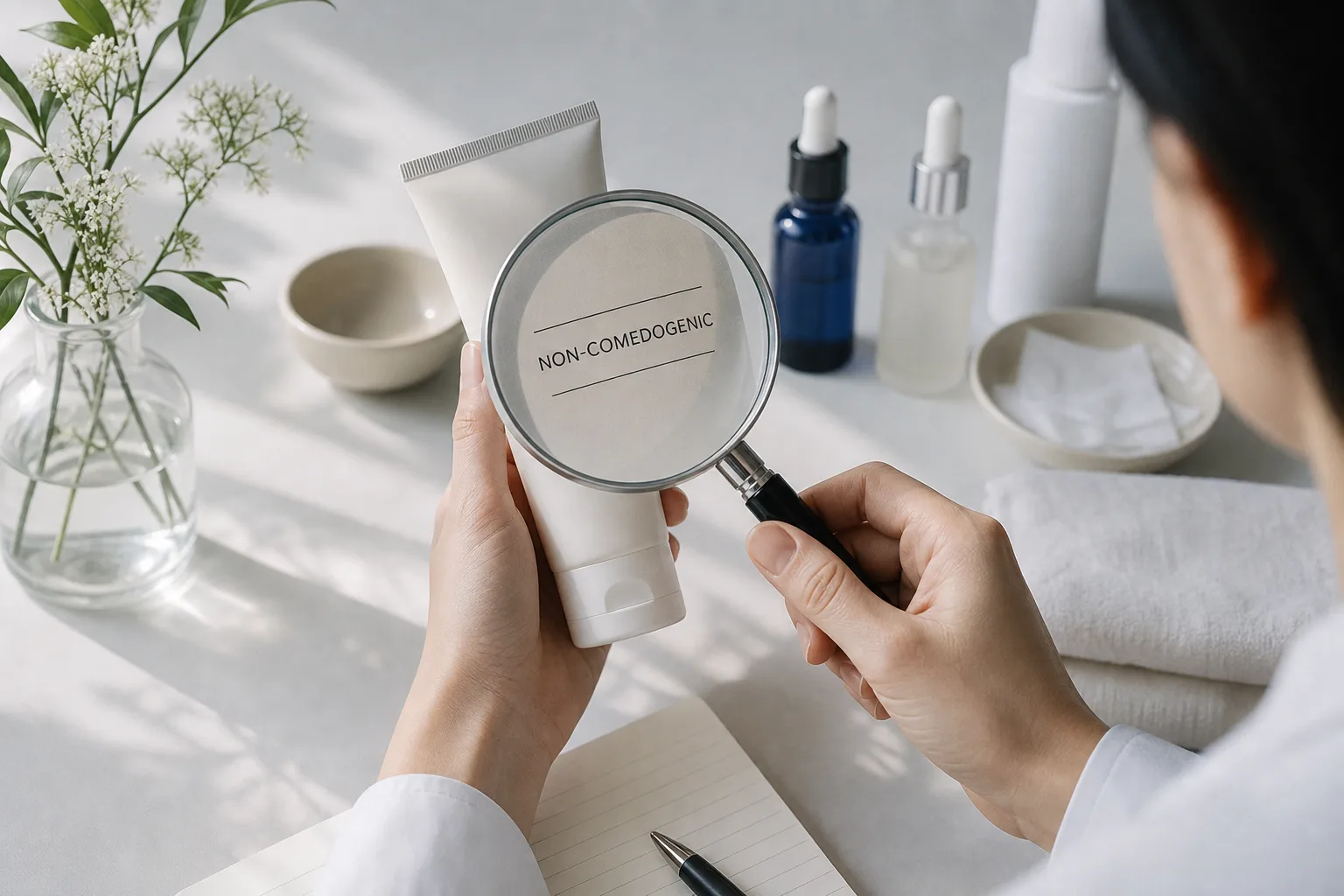
Imagine that a familiar moisturizer has stayed the same while a newer styling product has joined the routine. Looking only at the moisturizer would make the comparison artificially narrow. Reading the newer product’s label does not accuse it of causing a problem; it simply applies the same screening method across the categories named in the guidance. A familiar moisturizer and a newly added styling product can therefore be considered by the same standard, without assuming either one explains the concern.
A package can show whether an option carries one of the recommended labels. It cannot explain persistent acne. Keeping those two decisions separate prevents a useful shopping screen from becoming an unsupported conclusion.
Make the next decision proportionate
A proportionate product decision has three parts: notice the front-label wording, review the full ingredient list, and include both skin-care and hair-care categories when they are relevant. The result is not a verdict. It is simply a better-defined comparison between the products you are considering.
If persistent breakouts or irritation make those choices difficult to sort through, we offer a general skin and acne consultation covering your acne history, skin type, concerns, and tailored recommendations. A consultation creates space to discuss the products and questions in front of you without asking the label to answer more than it can.