

Hair products may be connected to hairline breakouts, but the location alone does not prove that one product is the cause. The American Academy of Dermatology notes that some hair care products can contribute to acne breakouts. Before replacing your whole routine or buying another product, use the hairline as a contact-point clue: compare where product reaches your skin, whether it remains there, when the pattern appeared, and where breakouts are concentrated.
For a product-focused starting point, our Pore-Clogging Ingredients Checker can help you review products you are considering. Treat that review as one part of the pattern, not as a verdict on the cause of a breakout.
Hairline breakouts are a clue, not proof
A hairline pattern gives you a specific place to look first: the area where hair, styling products, and skin may meet. It does not mean that every forehead or temple breakout comes from shampoo, conditioner, oil, cream, gel, or pomade. The useful distinction is between a pattern that justifies a focused review and a conclusion that assigns blame to one item.
Keep the rest of your routine in view. A product can be part of the picture without being the only change around the same time. The practical goal is narrower than finding a universally “safe” hair product: decide whether the way products reach the hairline plausibly deserves a targeted adjustment, or whether the pattern remains too unclear to make that call.
Compare product contact, residue, timing, and distribution
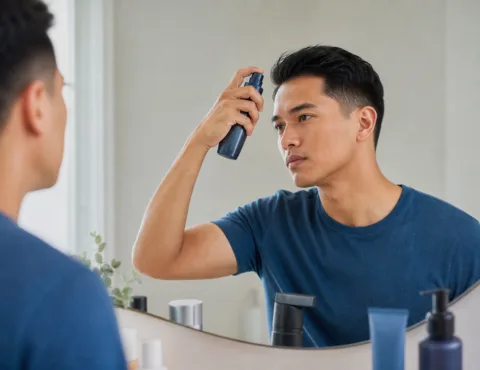
Contact means the direct routes from product to skin. Product may reach the hairline while you apply it, when hair rests against the forehead, or when you smooth product around the edges of the hair. Compare the areas that receive the most styling attention with the areas where breakouts appear. A close overlap is a reason to look more carefully at that contact point; a pattern far beyond it is a reason not to assume the hair product explains everything.
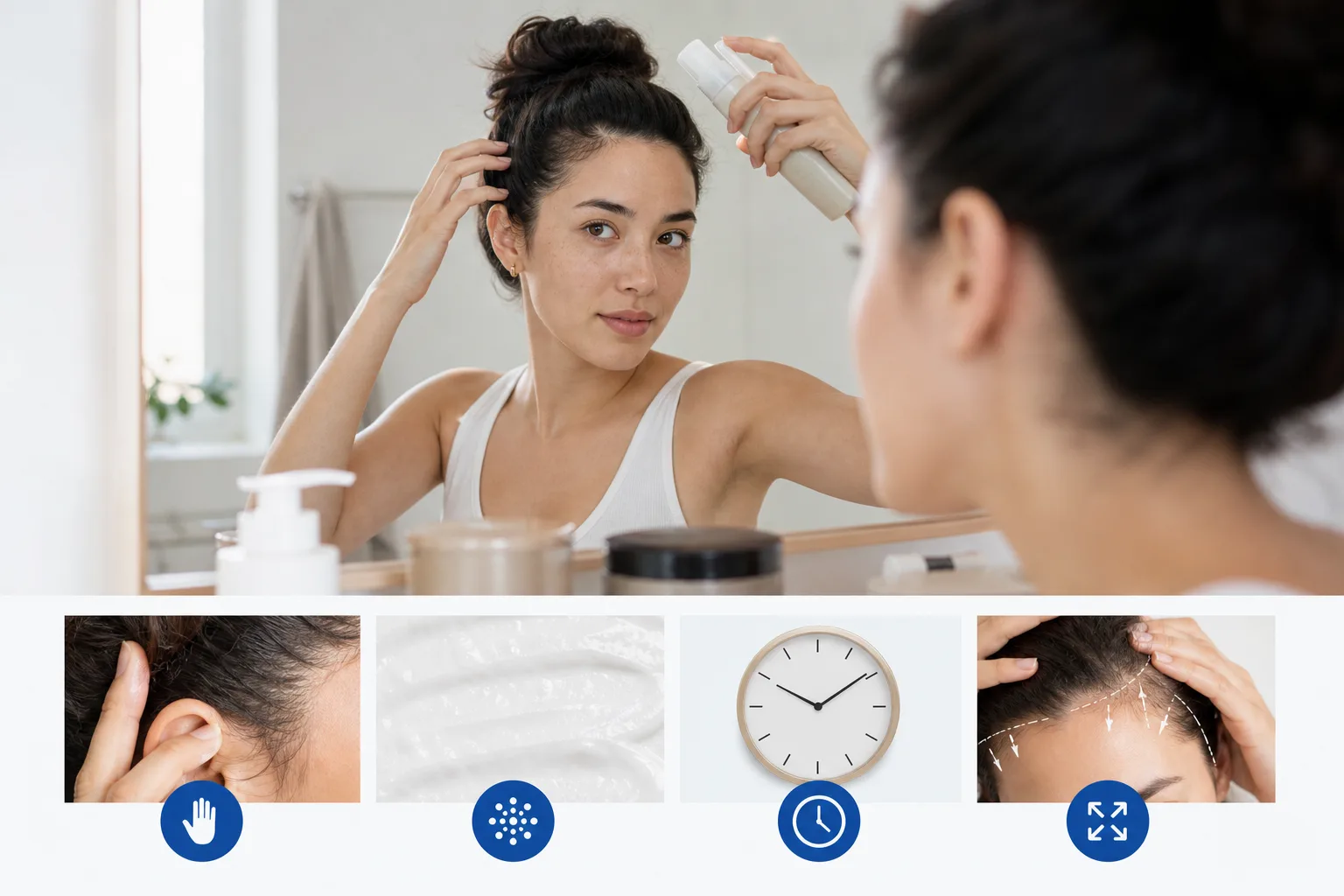
Residue is what remains near the hairline after styling. The practical comparison is not simply whether you use a product, but whether product is concentrated at the edges, transferred onto the forehead, or kept primarily within the hair. Keeping application focused on the hair and reducing unnecessary contact at the hairline is a proportionate adjustment when residue is a realistic part of the pattern. It avoids replacing every product at once.
Timing compares the appearance or return of a hairline pattern with changes in product use. Give greater attention to a new product, a different styling method, or a shift in how often product is used when it lines up with the pattern. Timing is still not proof. It simply helps distinguish a possible connection worth adjusting from a change that may be unrelated.
Distribution means the shape of the breakout pattern. Breakouts clustered near the hairline can support a contact-point review, while a wider or different pattern provides less reason to center the decision on hair products alone. Taken together, these comparisons help you choose between one focused routine adjustment and a more individualized review. They are more useful than changing several products and then trying to interpret a result.
Make one targeted routine decision
When contact, residue, timing, and distribution point in the same direction, make a limited adjustment rather than changing your entire routine. Keep styling product focused on the hair, reduce unnecessary transfer to the forehead, and avoid introducing multiple new products at the same time. This keeps the next decision tied to the hairline pattern rather than to a broad assumption about all hair products.

When those comparisons do not line up, do not force a product explanation. Continue to view the hairline as one clue within your overall routine. A label or ingredient review can be useful context, but it does not replace attention to where and how a product is used around your skin.
When personalized guidance may help
If hairline breakouts continue, irritation is also part of the picture, or several current products could be involved, a routine review may be more useful than another impulse purchase. At AcneClinicNYC, we offer in-clinic acne consultations and virtual acne consultations. Our virtual acne consultation reviews acne and skin type, current skincare and hair products, and relevant acne triggers.
For remote support, book your virtual consultation and include the hairline pattern alongside the rest of your routine.