
A pore clogging ingredients checker can narrow skincare and makeup options, but it cannot guarantee personal compatibility. Use it with package language such as “non-comedogenic,” “won’t clog pores,” or “oil-free” to screen candidates rather than label a product permanently good or bad. Our pore-clogging ingredients checker is a practical place to start.
Use a pore clogging ingredients checker as a screen, not a verdict
The American Academy of Dermatology advises choosing makeup, sunscreen, skin care, and hair-care products labeled “non-comedogenic” or “won’t clog pores.” It notes that these products do not cause breakouts in most people. That makes the label a useful first filter for products that touch breakout-prone areas, including makeup and hair products, without making it a promise for every person.
A checker has a different job: it helps you inspect an ingredient list. A flagged ingredient does not by itself establish that the finished formula will clog pores, and a clean result does not establish that the product will suit your skin. Keep both results in their proper place: they narrow the field; they do not settle personal compatibility.
Use a simple sequence to compare products
Use the same order each time you are deciding whether to keep or consider a product. First, identify what it is and where it will touch your skin. Next, give preference to package language such as non-comedogenic, won’t clog pores, or oil-free. Then use the checker to compare the ingredient list.
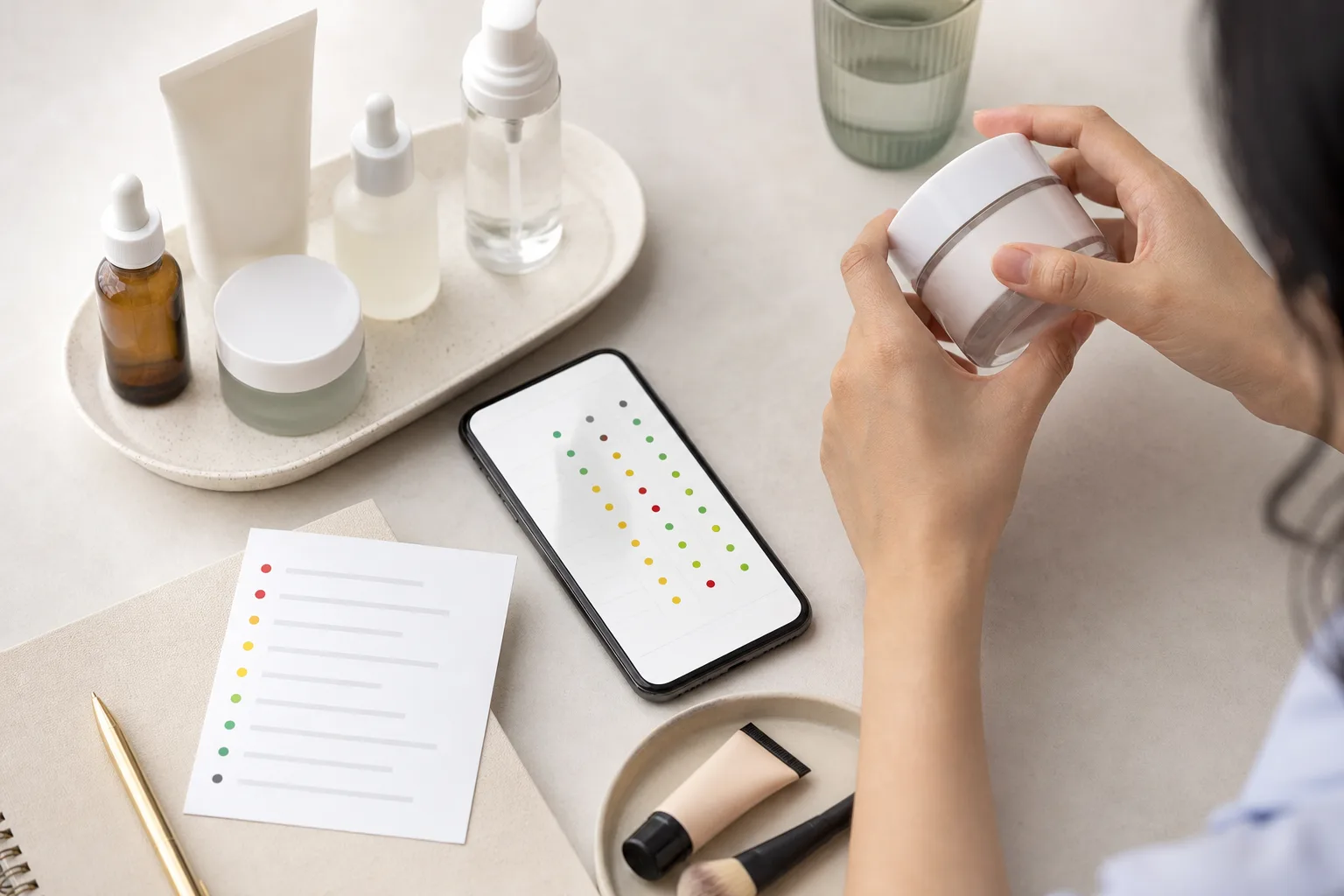
If a checker flags an ingredient, compare that product with other candidates instead of automatically rejecting it. If it does not flag an ingredient, retain the package-label screen and the fact that no result can promise compatibility. This keeps a checker result useful: it helps you narrow and compare options without turning one ingredient into a verdict on the complete formulation.
When to take a separate next step: Product comparison does not answer a separate visible skin-health concern. If you also have concerns such as pigmentation, rosacea, melasma, or signs of aging, our Skin Health & Rejuvenation Assessment — In-Clinic evaluates those concerns and provides a personalized treatment and home-care plan.
Screen makeup and remove it gently
You can wear makeup while making more acne-aware choices. The American Academy of Dermatology says people with acne can wear makeup and should select cosmetics carefully. For foundation, concealer, and similar products, use the same first screen: look for oil-free, non-comedogenic, or won’t-clog-pores language.
Makeup removal belongs in the routine as well. The Academy advises cleansing up to twice daily and after sweating, and cautions against scrubbing, including while removing makeup, because scrubbing can irritate skin. Cleanse before bed and remove makeup gently rather than trying to scrub it away.
Choose a next step when products keep complicating breakouts
Use the checker-and-label sequence when you need a straightforward way to compare products. If you still have breakouts after simplifying those decisions, book an assessment rather than continuing to cycle through products.
At AcneClinicNYC, our Professional Acne Assessment for Acne Program — In-Clinic reviews acne type and severity, treatment history, products, and possible triggers before outlining personalized next steps. Our Professional Acne Assessment for Acne Program — Virtual uses submitted photos, acne history, prior treatments, products, and possible triggers to provide personalized recommendations and next steps.
Explore AcneClinicNYC treatment and consultation options to choose the assessment that fits your situation.

AcneClinicNYC
Explore treatment and consultation options.