

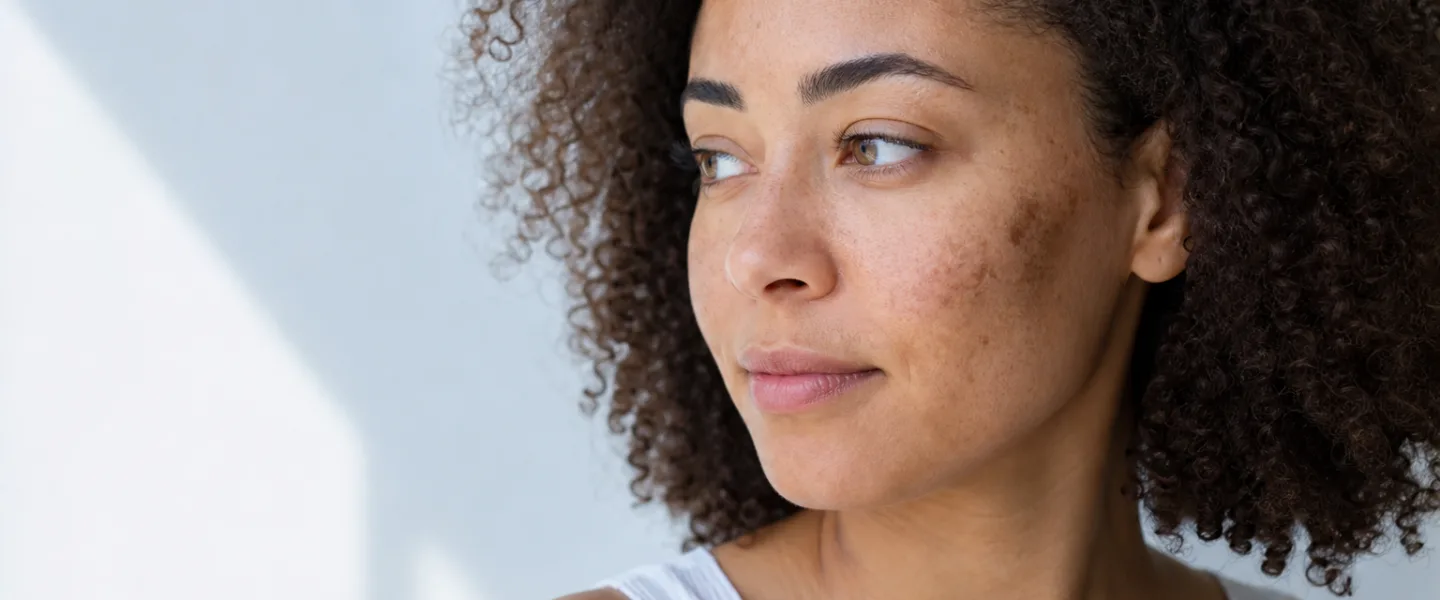
In the acne marks vs acne scars distinction, a flat area of post-acne color is generally discussed as a mark, while a persistent surface change points toward textural scarring. Brown or darker marks may represent post-inflammatory hyperpigmentation (PIH), red or pink marks may represent post-inflammatory erythema (PIE), and depressed acne scars can make the skin look rough or uneven.[1][3]
This practical distinction changes the treatment conversation. Color, altered texture, and active breakouts are separate concerns, although more than one can appear in the same area. Appearance alone is not a diagnosis, but describing the dominant feature makes the next discussion more precise.
Acne marks vs acne scars: start with color or texture
Start with what remains after the breakout settles. If the area differs mainly in color and the surface appears flat, discoloration is the main concern. If the surface looks depressed, raised, rough, or uneven, texture is central. The American Academy of Dermatology describes depressed or sunken acne scars as producing a rough, uneven appearance.[3]
Color and texture can coexist. A darker area over an uneven depression may involve both a post-inflammatory color change and textural scarring. Treating “mark” and “scar” as separate descriptions in that situation avoids forcing two visible features into one category.
| Visible feature | Practical focus | Detail that changes the next step |
|---|---|---|
| Flat brown or darker area | Post-acne pigment | Presence or absence of altered texture |
| Flat red or pink area | Post-acne erythema | Whether pigment or uneven texture is also present |
| Depressed, raised, or uneven surface | Textural acne scarring | Scar size, depth, nature, and location |
| Color with uneven texture | More than one post-acne feature | Separate planning for discoloration and scarring |
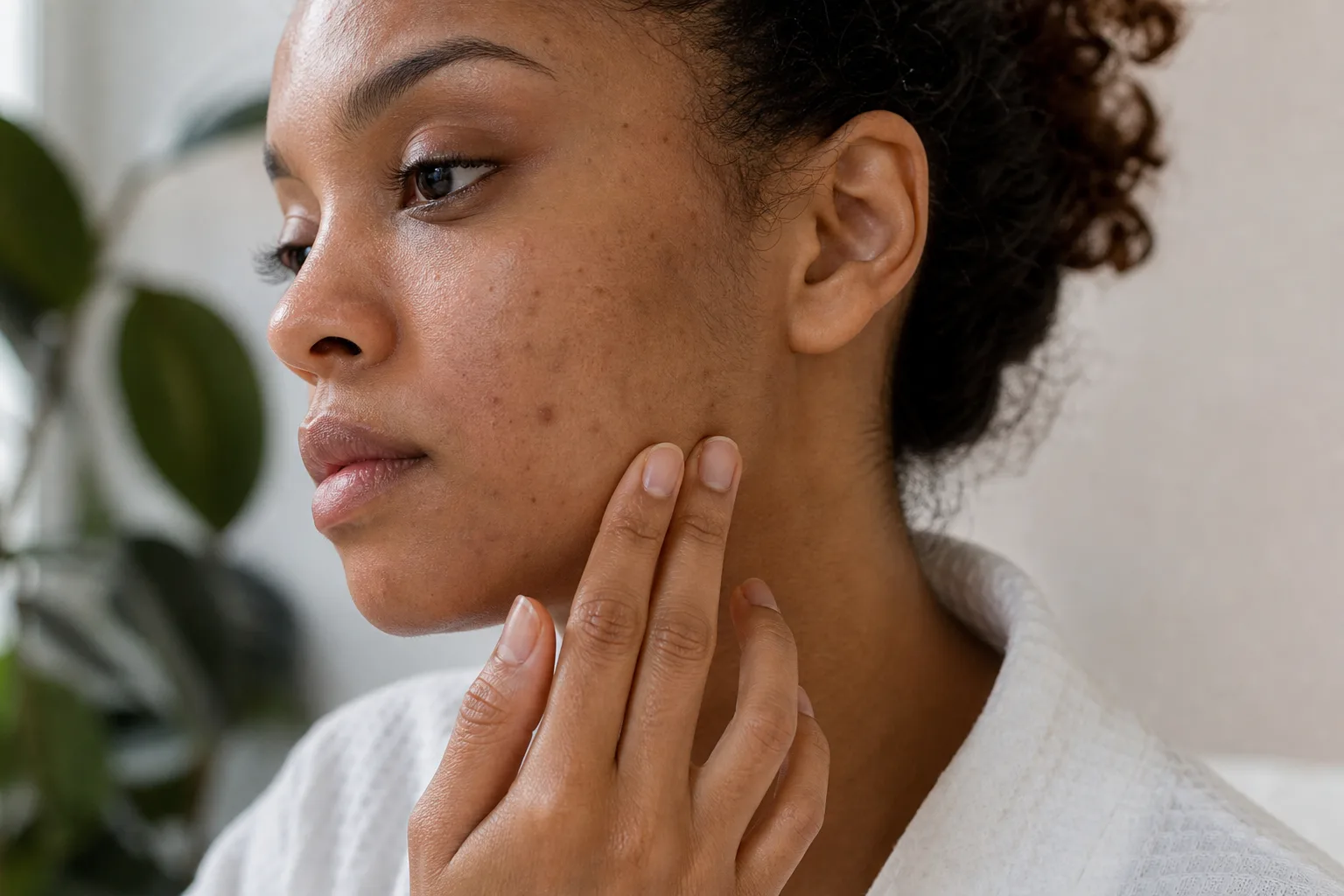
PIH vs PIE: what brown and red post-acne marks represent
PIH and PIE are both post-inflammatory color changes, but they arise through different processes. Post-inflammatory hyperpigmentation occurs when melanin is deposited within keratinocytes in skin that recently experienced inflammatory damage. DermNet notes that PIH is more common in darker skin types.[1]
Post-inflammatory erythema is thought to relate to microvascular changes and epidermal thinning during wound healing. DermNet describes PIE as more common in lighter skin.[1] This is different from the melanin deposition involved in PIH, so red or pink color and brown or darker color should not automatically be treated as interchangeable concerns.
Acne-associated color changes often improve over time, although improvement may take months or longer.[1] That time course is gradual rather than a deadline, and it does not promise that a particular mark will disappear. A mark remaining visible for months also does not, by duration alone, establish that the skin has developed a textural scar.
The expected course for color should not be applied to depressed or uneven texture. Texture belongs in a scar assessment, while PIH and PIE remain discoloration concerns even when they are persistent.
Active breakouts change the treatment sequence
Older marks or scars may be your most visible concern, but active acne comes first in the treatment sequence. Acne should be under control before acne scar management begins.[2]
After active acne is addressed, remaining color can be assessed as a discoloration concern, while altered texture belongs in scar planning. If you still have active spots, our acne treatment options provide the relevant starting point before scar procedures become the priority.
Your acne treatment history also affects this stage. AAD guidance advises sharing treatments you currently use or have used within the previous two years before beginning scar treatment. Starting some scar treatments while using—or soon after stopping—certain acne medications can cause unwanted side effects.[2]
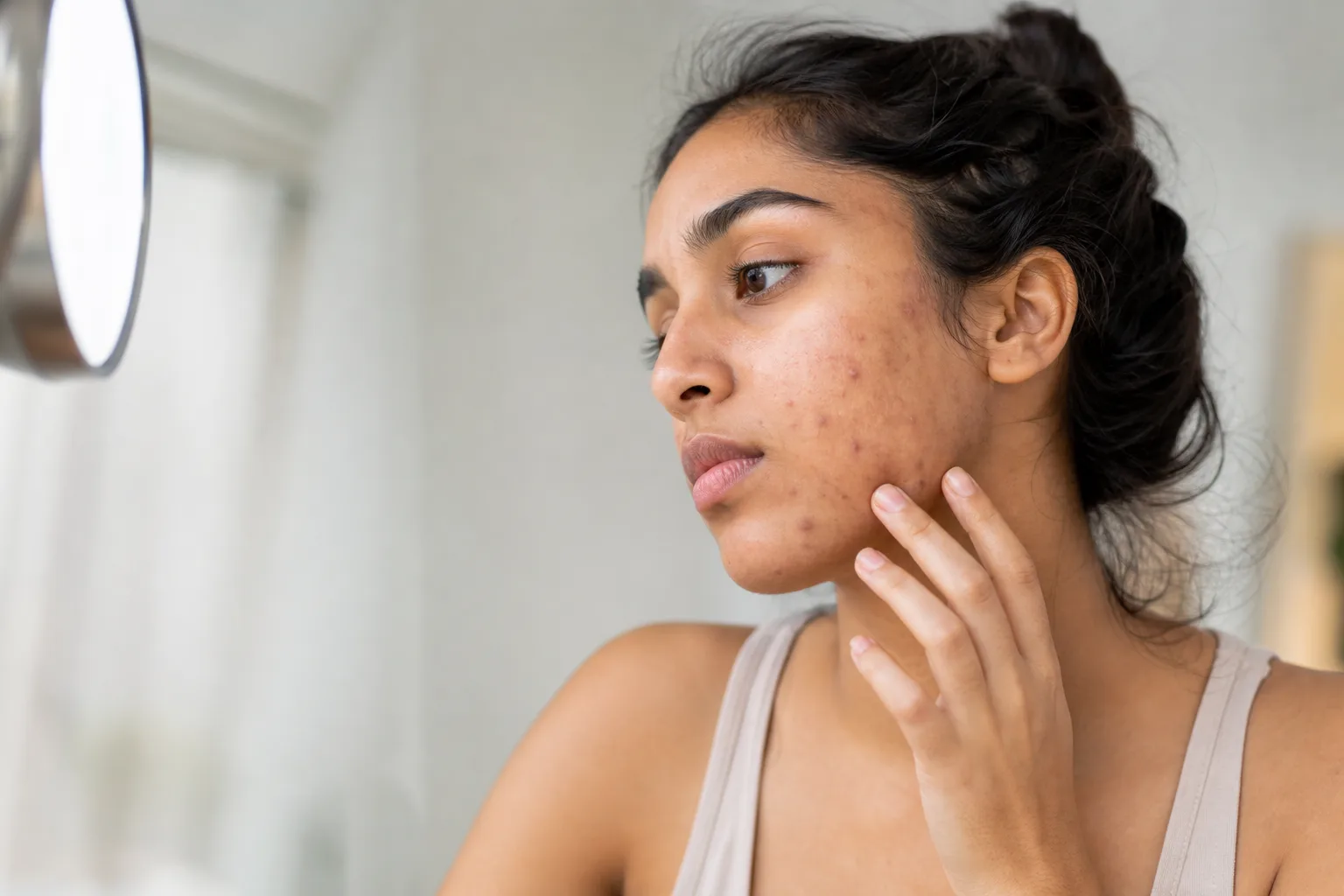
Scar type and your priorities shape the plan
Once active acne is controlled and texture is the concern, “acne scar” is still too broad to select a plan. An individualized approach considers the scar’s size, depth, nature, and location, along with baseline skin type, concerns, goals, and budget.[1]
Size, depth, nature, and location describe the surface change that needs to be addressed; for example, nature can include whether a scar is depressed or raised. Baseline skin type adds context for planning, while your goals define the improvement you want to discuss and your budget sets a practical boundary. These details can lead to different plans even when two concerns share the general label “acne scarring.”
Scar type is especially important because choosing treatment requires knowing which option works best for each type of acne scar.[2] A treatment should not be selected only because it is promoted broadly for acne scars; the characteristics of your scarring need to guide the conversation.
At AcneClinicNYC, we offer in-clinic and virtual acne consultations. When the remaining concern is post-acne color, uneven texture, or both, the next step is an acne scar consultation.
Book your acne scar consultation to discuss whether your main concern is discoloration, uneven texture, or a combination of these features.