

A Normal and Reversible Physiologic Response
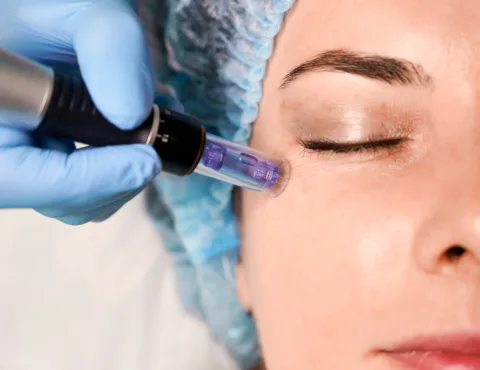
Erbium laser resurfacing is widely used in our AcneClinic NYC for the treatment of acne scars, textural irregularities, and photoaging. Due to its high affinity for water and precise ablation profile, the erbium laser allows controlled epidermal and superficial dermal injury with predictable healing and a favorable safety profile.
Despite these advantages, some patients report an unexpected finding during the post-treatment period: reduced facial hair growth or an apparent absence of fine facial hair. While this observation can be concerning to patients, it is important to emphasize that in the vast majority of cases, this effect is expected, temporary, and physiologically explainable.
Follicular Response to Controlled Thermal Injury
Erbium laser resurfacing induces a controlled thermal and ablative injury designed to stimulate skin regeneration. Although hair follicles are not the intended targets, they are biologically sensitive structures that respond to cutaneous stress.
Following resurfacing, hair follicles may temporarily enter the telogen phase of the hair cycle. This phenomenon, often referred to as follicular shock, represents a protective response to injury. During telogen, visible hair growth pauses, even though the follicle remains viable and intact. This response is well documented in various forms of cutaneous trauma and inflammatory stress and does not indicate permanent follicular damage.
Superficial Location of Facial Hair Follicles
Facial hair—particularly vellus hair and fine terminal hairs—resides relatively superficially within the dermis. Because erbium laser energy primarily affects the epidermis and superficial dermal layers, some degree of thermal influence on the upper follicular structures may occur.

This interaction can slow hair regrowth without destroying the follicle. Importantly, erbium lasers lack the wavelength specificity and depth of penetration required for permanent hair removal. When appropriate parameters are used, follicular stem cells remain preserved, allowing eventual resumption of normal hair cycling.
Post-Inflammatory Prioritization of Skin Healing
After resurfacing, the skin enters an active inflammatory and reparative phase. During this period, physiologic resources are redirected toward wound healing processes such as re-epithelialization, collagen remodeling, and barrier restoration.
Hair growth is not a biological priority during acute skin repair. As a result, hair cycling may be delayed until inflammation subsides and the skin returns to homeostasis. This temporary suppression is particularly noticeable in facial areas that received more intensive treatment.
Barrier Repair and Temporary Suppression of Adnexal Activity
Barrier repair plays a central role in post-laser recovery. Keratinocyte turnover, lipid synthesis, and epidermal differentiation are prioritized in the weeks following treatment. During this time, adnexal structures—including hair follicles and sebaceous glands—often exhibit reduced activity.
Clinically, this may manifest as decreased oil production and delayed hair regrowth. Once barrier function is restored, adnexal activity typically normalizes without intervention.

Optical Changes and Perceived Hair Loss

In some cases, hair regrowth is present but appears less visible. Erbium resurfacing improves surface smoothness and light reflection, which can reduce the visual contrast between fine hairs and surrounding skin. As a result, patients may perceive hair loss when, in fact, hair density has not significantly changed.
Duration and Prognosis
In nearly all cases, reduced facial hair growth following erbium laser resurfacing is temporary. Regrowth typically begins within 6 to 12 weeks, though some patients may experience delayed recovery lasting up to 3 to 4 months. Permanent hair loss is exceedingly rare and is generally associated with overly aggressive settings, excessive overlap, or improper technique.

Further evaluation may be warranted if there is no visible regrowth after four to six months, if hair loss is patchy and corresponds to over-treated areas, or if the patient has a history of aggressive laser parameters.
Clinical Recommendations
To support optimal recovery, patients should avoid waxing, threading, or epilation until the skin has fully healed. Laser hair removal in treated areas should be postponed for at least six to eight weeks. Post-procedure care should prioritize barrier repair with appropriate occlusive agents, gentle cleansing, and strict photoprotection. Early stimulation with retinoids, exfoliating acids, or other actives should be avoided.
Conclusion
Temporary reduction in facial hair growth after erbium laser resurfacing represents a normal physiologic response to controlled skin injury and subsequent healing. With appropriate technique and aftercare, hair growth almost always returns as the skin completes its recovery cycle.