
Yes—moisturizer for acne-prone skin can still be useful. A moisturizer can help whenever your skin feels dry, including in winter; having acne does not make dryness irrelevant. The practical goal is not to avoid every moisturizer, but to choose by the label and use it when dryness is present.
This distinction matters when you are tempted to leave moisturizer out of your routine because you are worried it will automatically create more breakouts. Dryness and acne-proneness can coexist. A clear product-selection criterion and a straightforward application step can replace that all-or-nothing decision.
Why moisturizer for acne-prone skin can still make sense
A moisturizer can be helpful any time your skin feels dry, including during the winter. That is the starting point for a more useful decision: respond to dryness rather than assuming acne-prone skin should never be moisturized.
Moisturizer is not presented here as a promise to resolve acne. It is one part of a routine choice. The relevant evidence-backed point is simpler: dryness is a valid reason to consider moisturizer, even if breakouts are also part of your experience.
That approach avoids two unhelpful extremes. One is treating moisturizer as something that acne-prone skin must always avoid. The other is expecting any moisturizer to suit every situation. Instead, let the dry feeling guide whether moisturizer belongs in the moment, then let the product label guide what you choose.
How dryness, oil, pores, and breakouts are connected
Dry skin and oily skin are not opposite decisions with no overlap. When skin becomes dry, the body makes more oil. Extra oil can clog pores, which may lead to more breakouts. This is why simply stripping moisturizer from a routine is not a reliable shortcut for someone concerned about oil or blemishes.
The useful takeaway is not that dryness guarantees breakouts, or that every breakout has the same cause. It is that dryness can be relevant to the oil-and-pore pattern described above. Keeping the distinction in view helps you make a product choice without treating a general pattern as a personal diagnosis.
In practical terms, “acne-prone” is not a reason to ignore a dry feeling. It is a reason to be more deliberate about the moisturizer you select. The next decision is therefore about the container and its stated description—not about trying to predict an outcome from texture, packaging, or marketing alone.
How to choose a moisturizer without guessing
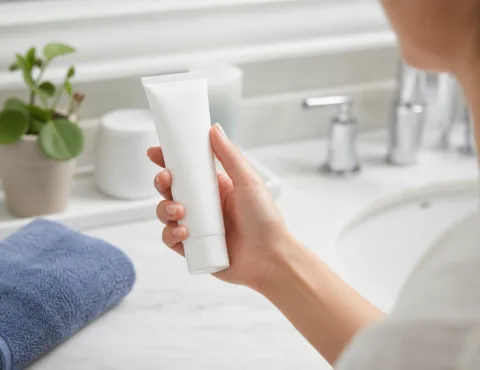
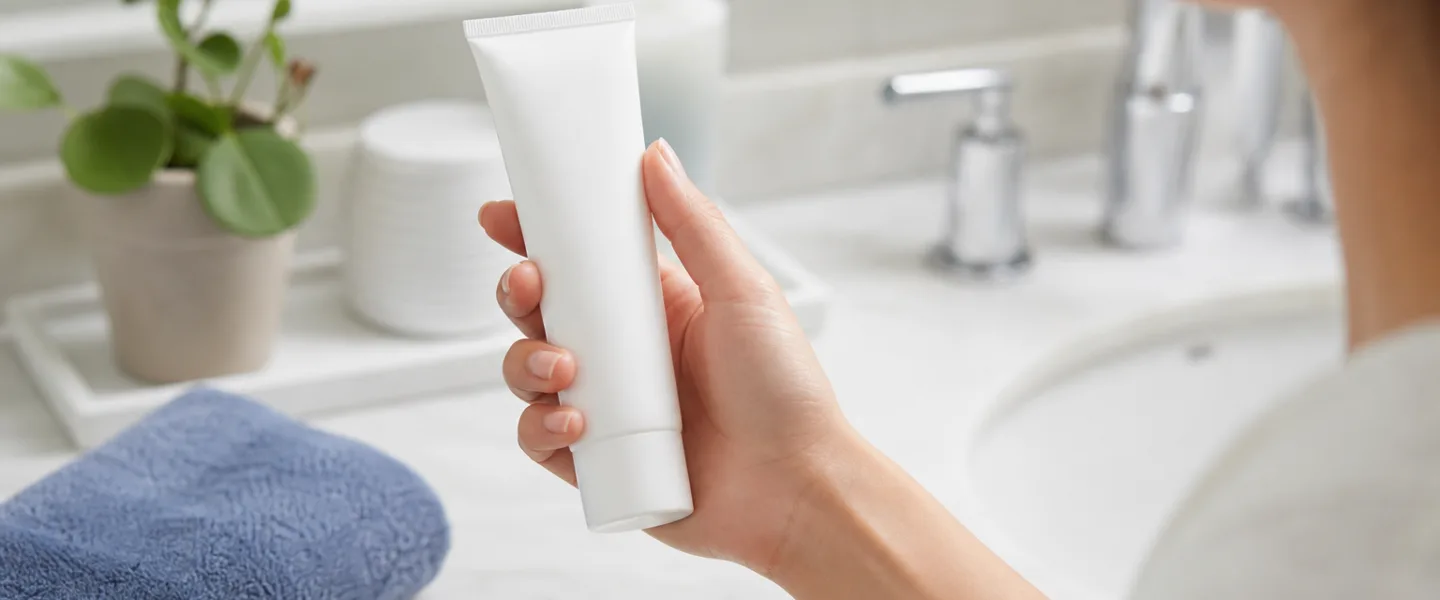
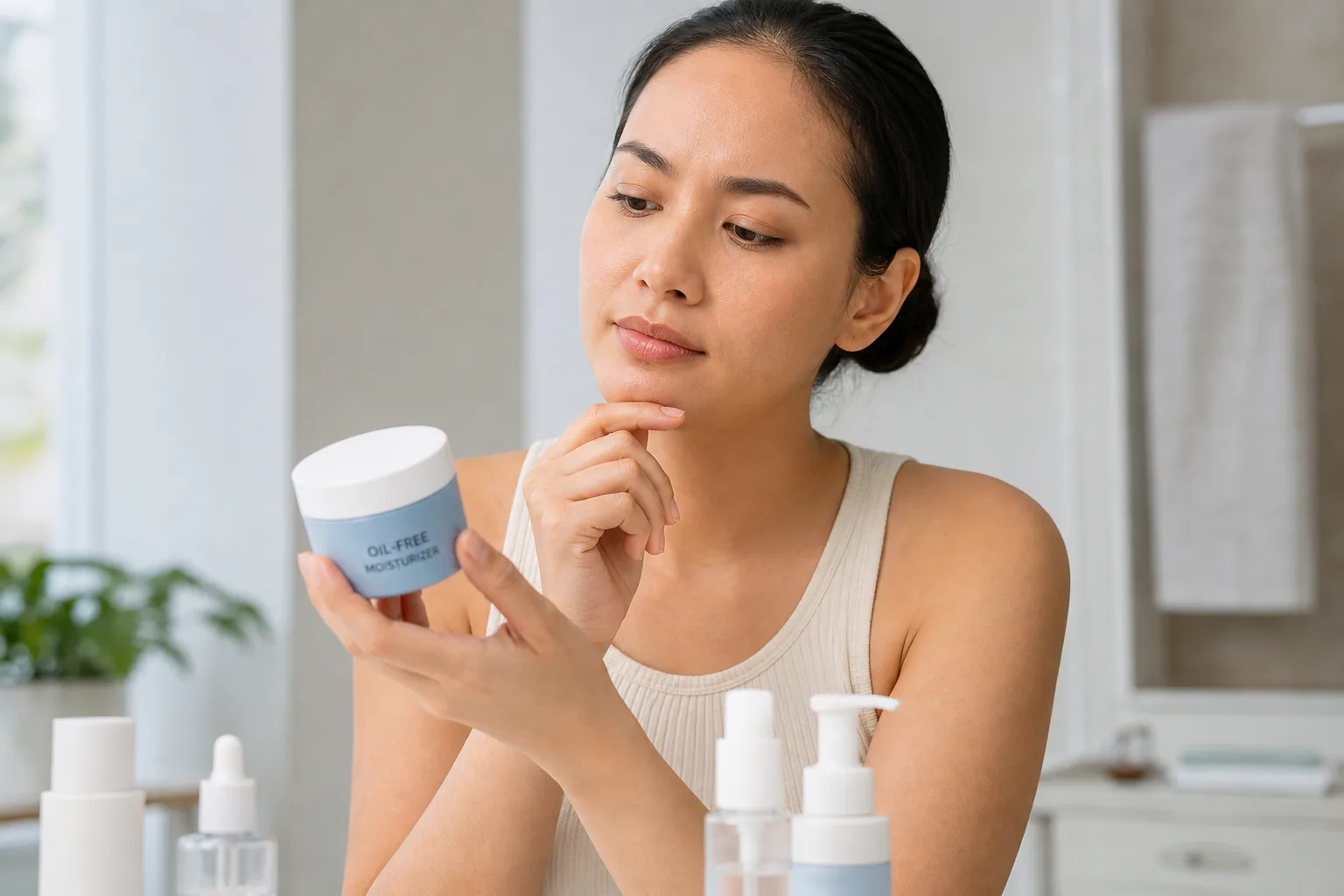
Start with the label. For acne-prone skin, look for a moisturizer described as oil-free. According to the American Academy of Dermatology, that description means the moisturizer is unlikely to cause acne. It is a concrete selection criterion you can use at the shelf or while reviewing a product you already own.
Keep the decision narrow: identify an oil-free moisturizer, then use it when your skin feels dry. This is more useful than relying on the broad assumption that all moisturizers are either good or bad for acne-prone skin. A label description gives you a relevant piece of product information; it does not turn a product into a universal answer for every concern.
When you are comparing skincare or makeup products and want another product-screening step, use our Pore-Clogging Ingredients Checker.
Use timing as part of the routine
Apply moisturizer after washing. Applying it after washing helps trap much-needed water in the skin. This makes the sequence easy to remember: wash first, then apply moisturizer when your skin feels dry.
Timing and selection solve different parts of the same decision. The oil-free label helps you narrow the type of moisturizer; applying it after washing addresses when to use it. Neither step requires you to make a sweeping conclusion about your skin based on a single dry spell or breakout.
Put the choice into a simple next step
For a straightforward moisturizer decision, use this sequence: acknowledge dryness when it is present, choose an oil-free moisturizer, and apply it after washing. That is a proportionate routine adjustment grounded in the available guidance.
If product choices, irritation, or persistent breakouts are making the routine harder to navigate, consider which consultation format fits your situation. A virtual acne consultation is a remote consultation that reviews your acne and skin type, your current skincare and hair products, and relevant acne triggers. Its remote format can fit when discussing those details without an in-person visit is the better next step for you.
An in-clinic General Skin & Acne Consultation is the in-person route. It covers your acne history, skin type, concerns, and tailored recommendations at our listed locations in Manhattan, Brooklyn, and North Babylon. This route can fit when you want that in-person consultation and its acne-history and concern review at one of those locations.
The choice is between a remote review of your acne, skin type, current products, and triggers, and an in-person consultation covering acne history, skin type, concerns, and tailored recommendations. Neither format is presented as a universal answer for every situation. Clients under 18 must be accompanied by a parent or legal guardian for either consultation route. If the in-clinic route fits your next step, book a consultation with us.
For a broader overview of available next steps, explore our acne treatment and consultation options.